Be The Healthy U!
  • Healthy Blog
  • Healthy Recipes
  • Online Cooking Classes
  • I Can Help
  • 28-Day Program
  • Healthy Dog Blog
  • About Terri
  • Resources
  • Ask Dr. Terri
  • Testimonials

New Year's Resolutions

12/31/2013

0 Comments

 
Picture
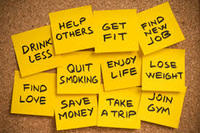
It’s that time of year again, time for those New Year’s Resolutions. Time to make some kind of change, and for many, it’s a big change, such as losing weight, improving health, quitting smoking, changing jobs (or getting a job), finding romance, getting out of a bad relationship, spending more time with family, reducing stress, or some other major change.

Lasting, successful change doesn’t often happen overnight. So how realistic is it to declare your intention to lose weight or find romance today and effectively have it happen tomorrow, January 1? Making the intention and actually doing it are two different things.

What you are really doing when you make big changes is throwing away your bad habits that created or perpetuated the problem and creating new habits that will help you not only reach your goals, but also maintain those goals once you’ve reached them. Losing weight is not like a bucket-list item that once you’ve done it, you get to check it off and move on, keeping only the lasting memory of having done it.

Once you’ve gone to all the trouble to lose the weight, you don’t want to go back to your old habits and gain it all back. You want to keep it off so that you continue to look and feel great and fit into those smaller clothes. So what you are really saying when you want to lose weight is that you want to create a new lifestyle of habits that will not only get you to your ideal weight, but will also keep you at your ideal weight.

It helps to be clear on which habits need to go and which new habits you must create to be successful. And while habits are difficult to change, they’re not impossible. We do those things automatically, and if we try to change too many habits all at once, we’re likely to hit a wall and go right back to our comforting old habits. That’s why the gyms are packed on January 2 and empty again by February 1.

Picture
What can you do to successfully achieve your New Year’s Resolution? Take baby steps. Pick one small manageable step you can take toward change that you absolutely know you will not fail at doing. Then just do it!

Once that’s done, pick another small manageable step and just do that! Like putting one foot in front of the other, keep taking the next small manageable step as you’re ready to take it. Before you know it, you’ll be there!

For example, if your goal is to find a new job, you may want to start by deciding on what kind of job you want to get. A small step could be to learn what opportunities exist that exploit your strengths and your passions by doing a Google search on “Careers or jobs involving your strength or passion”.

Maybe you need to put together a resume or update your existing resume. That’s a big step that you might procrastinate on doing. A small manageable step could be to find an example of a resume you like. Your next small step might be to add your name and contact info into that format. Then your next small step could be to add just your most recent experience. Then your next small step could be…

If your goal is to lose weight or be healthier, a small step could be to add one apple to your diet every day. No matter what else you eat, just make sure you eat that one, fresh apple, each and every day. Once you are comfortable with that, add a green salad to your diet every day. No matter what else you eat, just make sure you eat one fresh apple AND a green salad, each and every day.

As you add more and more good, nutrient-dense foods into your daily diet, you will find yourself crowding out the bad foods. Over time your tastes will naturally change to the point that you will want to eat the better foods that promote weight loss and good health, and you will like the foods that made you fat and unhealthy less and less.

Each time you successfully complete a small, manageable step, no matter how small, you build confidence and momentum. Soon you will find yourself taking larger and larger steps, and you will make faster and faster progress that builds on a solid foundation, making a relapse less and less likely.

So, don’t make some grand, sweeping resolution declaring your intention to make a major change. Instead, make a resolution to take a series of small, manageable steps that you absolutely know you can (and will) take, one, after another, after another, until you incorporate those permanent changes you’re after.

For more on New Year’s Resolutions, click here. 

Wishing you and yours a Healthy, Happy, and Successful New Year! May all your dreams come true in 2014!!!


Please leave a comment: what is your resolution and what is the first small, manageable step you will take?


0 Comments

Merry Christmas!

12/24/2013

0 Comments

 
Picture
Presents are wrapped. Kitchen is clean after a great dinner. Dogs have been fed. “It’s a Wonderful Life” is playing on the television. The usual anticipation for tomorrow morning. So much to be grateful for!


Wishing you a very Merry Christmas in excellent health and hoping that Santa brings you everything on your wish list!

0 Comments

Winter Solstice

12/21/2013

0 Comments

 
Picture
Today is winter solstice, the shortest day of the year, and officially the first day of winter in the northern hemisphere. As winter starts, we are having crazy weather in parts of the U.S. with record-breaking high temperatures in the eastern U.S. after weeks of back-to-back winter storms and cold air outbreaks.

Cold weather and large temperature swings can wreak havoc on your immune system, making you more susceptible to catching a cold or flu. This is compounded by extra indulgences in holiday goodies that are mostly loaded with sugar, processed, refined flour, and fat because your body is likely running on a deficit of nutrients, which adds stress.

So what can you do to stay healthy this winter? Be sure to give your body the nutrition it needs. The best way is by eating foods that boost your immune system, including whole, plant-based foods that are naturally rich in antioxidants (vitamins A, C, and E), zinc, and selenium. Here are some suggestions for foods you can add to your diet that have these nutrients:

Foods like sweet potatoes or yams, butternut squash, pumpkin, carrots, and cantaloupe will give you vitamin A. Cut a butternut squash in half and roast it at 350 °F for about an hour, then puree the flesh and use it to make a soup or add it to your favorite marinara sauce to make a butternut squash marinara pasta sauce. It’s hearty and comforting in the cold weather! Add pureed pumpkin to pancake batter along with a little cinnamon to make incredible pancakes (be sure to cut back on the liquids)! Pumpkin is also rich in zinc, as are the pumpkin seeds (so are butternut squash seeds, and they are delicious roasted!).

Leafy greens such as spinach, kale, collard greens, chard, turnip greens, mustard greens, arugula, and even romaine lettuce are loaded with vitamin C as well as calcium, iron, vitamin K, and fiber. Eat a salad with your lunch or dinner that’s made with romaine lettuce or any other greens. You can always toss romaine lettuce or other greens such as spinach or kale on your sandwiches, and chop up some greens to thrown into anything you’re cooking on the stove: soup, stir fry, pasta sauce, rice, anything! If you don’t like greens, steam them, puree them, then add them to any foods you’re cooking and you won’t even notice they’re there. Spinach is best for this because it’s slightly sweet with absolutely no bitterness.

Eat some fresh fruit such as oranges, apples, berries, cantaloupe, mango, papaya, or pretty much any fruit. For example, peel and eat an orange first thing in the morning while you’re preparing your breakfast. Or, throw the fruit into your blender and make a smoothie. If you live in an area where fresh fruit is limited during the winter, keep frozen fruit on hand.

Make soups with beans or lentils to get more zinc. Bean and brown rice burritos with leafy greens tossed in are one of my favorites! Or you can easily toss beans on your salad. Pureed beans make delicious, “creamy” sauces with all the nutrients and without the saturated fat and cholesterol in dairy-based cream sauces (not to mention the mucus caused by dairy).

Mushrooms and garlic – one of my favorite combinations! And both are loaded with immune-boosting antioxidants. Start with garlic and mushrooms (I love to add onions too), then throw in some leafy greens, and you have nutrient-dense foundation that you can build into a delicious sauce or a soup.

These are just a few ideas that can help keep you healthy this winter. I’d love to hear your ideas. Please leave a comment!

0 Comments

Digestion and Assimilation: How does it work?

12/18/2013

4 Comments

 
Picture
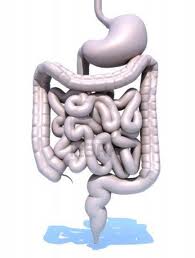
Did you ever wonder what exactly happens to your food between the time you put it into your mouth and the time it comes out the other end? Sure, you know that it gets digested, and you may even know that it also gets assimilated. But do you know exactly what that means?

Let’s take a little adventure through your digestive tract and find out what happens in there!

To begin with, your digestive tract is really nothing more than a very long tube that runs through your body with openings on two ends, your mouth, and, well, you know the other end.

Digestion is simply the breakdown of food into smaller components that can be absorbed into the blood stream. Mechanical processes such as chewing or churning smash and break food down into smaller pieces. Chemical processes break large food molecules into smaller molecules. Both processes release nutrients from the food.

Assimilation follows digestion. Nutrients that are released from the food get absorbed into the blood stream and transported to cells throughout the body to perform their various functions.


Read More
4 Comments

How to Manage Stress

12/13/2013

0 Comments

 
Stress. We are a stressed-out society. Most of us experience some level of stress much of the time. And as a result, we often experience many common symptoms of stress, including headaches, sleeplessness, lack of energy, lack of motivation, compromised immune systems, and cravings (for the wrong foods). Sound familiar?

But is all stress bad? We tend to lump all stress together into one great big all-encompassing category and treat it as if there’s only one solution, and that is to slow down. But slowing down reduces productivity, which then causes even more stress. In his book, “Thrive”, Brendan Brazier describes three types of stress and how to effectively manage the types of stress.

The first type of stress is uncomplementary stress, which is anxiety that produces no benefit and should be eliminated or reduced as much as possible. Uncomplementary stress accounts for the majority of our stress. Causes of uncomplementary stress include psychological stress (e.g., worrying about future events that cannot be controlled), environmental stress (e.g., breathing and ingesting toxins), and nutritional stress (caused by not eating enough whole, unprocessed, unrefined nutrient-dense foods). According to Brazier, “nutritional stress is by far the greatest source of uncomplementary stress, accounting for approximately 70 percent of it”.

The absence of healthy foods causes stress because the body does not have what it needs to support cell regeneration to rebuild new body tissue. A common cause of nutritional stress is consuming too much refined food, and is linked to compromised health and the development of food sensitivities and food allergies.

The second type of stress is complementary stress, which stimulates renewal and instigates growth within the body. Exercise, the best way to stimulate regeneration of cells, is a form of complementary stress. Complementary stress can also be stimulated by uncomplementary stress. For example, positive change can be triggered when uncomplementary stress is no longer tolerable. On the other hand, many people tolerate uncomplementary stress when things are unpleasant, but bearable. So in a sense, something that is unbearable is better than something that is simply dissatisfying because something unbearable will be a catalyst for change.

The third type of stress is production stress, which is created when you strive to achieve a goal. It is an unavoidable by-product of being productive. Working toward a goal can be demanding as well as rewarding.

Knowing the different types of stress, the best strategy to manage stress is to select your stressors by cultivating beneficial stressors while at the same time reducing or eliminating unbeneficial stressors. Your productivity will improve if the right stressors are eliminated.

The easiest way to greatly reduce uncomplementary stress is by consuming an abundance of nutrient-dense, whole, plant-based foods. Regular consumption of these foods supports cellular regeneration, which is needed to rebuild new body tissue, a process that is vital for every aspect of health and vitality.

Furthermore, whole, plant-based foods are easier to digest and assimilate. Consuming foods that are more easily assimilated conserves large amounts of energy and therefore reduces stress in the body. The energy conserved becomes a net energy surplus that the body can use to improve immune function and speed up restoration of cells damaged by stress, both anti-aging activities.

On the other hand, processed and refined foods have had nutrients and enzymes stripped away, so the body has to work harder to produce its own enzymes to digest and assimilate the food, which results in a huge energy draw that stresses the body and leaves you tired after you eat.

In addition to extra energy and anti-aging activities, other benefits of consuming more nutrient-dense whole, plant-based foods include decreased body fat, enhanced mental clarity, and loss of cravings for refined foods.

We don’t always have control over all of our stressors. However, we do have control over what we choose to put into our bodies. By choosing nutrient-dense whole, plant-based foods, we can greatly reduce or completely eliminate nutritional stress, which in turn will reduce the majority of our uncomplementary stress to help us achieve balance and health.
0 Comments

Balance and Blogging

12/11/2013

0 Comments

 
Last night I posted my 150th consecutive daily blog, something I am very proud of. If you’ve been reading my posts, you know that they are loaded with content related to nutrition and health. When I set out to post something content-rich every day for one year, I didn’t think through the fact that each content-rich post would be its own separate report.

In essence, I have been writing a new report every day, and I do all my own writing and researching. That means that every day, including weekends and holidays, I come up with a topic, check facts, dig up original reports, scientific articles, and other references, compile nutritional data (when relevant), run calculations to put those numbers into context, then write it up to post.

I typically spend anywhere from 2-8 hours every day writing these posts. And I love writing them! However, it comes with a price. Balance. Or, should I say, lack of balance. This pace that I set for myself has affected my sleep, my personal life, and my business. The pace has brought about self-imposed stress and has me out of alignment with some of the healthful principles I write about.

In order to bring myself back into alignment with those healthful principles and bring balance back into my life, I will continue to write daily. However, I will impose a one-hour time limit on the amount of time I spend writing every day. What does this mean as far as posting? I means that I will be publishing posts when I finish writing them, which will likely not happen every day. My goal is to publish at least two posts every week. I will continue to deliver quality posts, the only difference is that they will appear a little less frequently.

Thank you in advance for understanding. Please leave a comment if you have any feedback.
0 Comments

Every Moment is a Gift

12/10/2013

0 Comments

 
Picture
Today was a tragic day for a 28-year old woman and her 4-year old daughter. They were driving along Interstate 5 near Camp Pendleton this morning in north San Diego County when her Black GMC Yukon slammed into the back of a stationary semi-truck at the end of a line of trucks stopped at the San Onofre truck inspection station. The truck driver was unharmed.

The northbound side of the freeway was closed for a few hours, creating gridlock that backed up 25 miles and lasted several more hours, even after two lanes were opened.

Why am I telling you about this? Because I was one of those drivers who spent several hours sitting in that gridlock on northbound Interstate 5 today. And if you’ve ever been on that stretch of interstate, you know that there are no side streets alongside the interstate and there is no way to turn around. You’re stuck. Your only options are to stay in the traffic or pull off to the side of the highway and wait. Either way, you’re in it for the duration.

What do you do in a situation like that? Relax and center yourself. There’s no point getting worked up because there’s nothing you can do to change the situation. Enjoy some good music or listen to an audio book. Hopefully you keep snacks and water with you. If you need a break, pull off to the side of the road.

Be grateful. Your life may be impacted for a few hours, but at least you will reach your destination safely, unlike the victims of the accident. It’s so easy to take our lives for granted, and that accident serves as a reminder that every moment is a precious gift, even if those moments are spent in traffic. Being grateful will help you to relax and center yourself.

It was a long day in traffic, and I know that I am grateful to be at home sitting safely in front of my computer writing this post and having the opportunity to connect once again with all my loved ones!

0 Comments

Carrots, the Rest of the Story

12/9/2013

1 Comment

 
Picture
Last week when I wrote about carrots and dental health, I focused only on a few of the many health benefits caused by eating carrots. In this post, I will focus on the rest of the healthy benefits of eating carrots.

Carrots are rich in carotenoids (beta-carotene) and vitamin A, both antioxidants, as well as vitamin K, and potassium. Plus, carrots are a good source of fiber, flavonoids and vitamin C, also both antioxidants, and B vitamins. A medium-sized carrot has nearly twice the Recommended Dietary Allowances (RDA) for vitamin A, close to the same amount of potassium as a small banana and close to the RDA for vitamin K! The RDA for vitamin A is 900 micrograms (mcg, 6,000 IU) retinol activity equivalents (RAE) for adult men and 700 mcg (4,667 IU) RAE for women. A medium-sized carrot has 10,191 IU (3,057 mcg).

You are probably aware that carotenoids (beta-carotene) and vitamin A in carrots are beneficial for eye health. Beta-carotene helps prevent cataracts and protect against macular degeneration, and is converted into vitamin A in the liver, which is required for night vision.

Eating carrots has been shown to lower the risk of cancer, and researchers isolated falcarinol, a natural pesticide in carrots, as a compound that reduced likelihood of developing tumors in rats. Falcarinol could be responsible for the anti-cancer benefits of carrots

Eating carrots helps prevent heart disease and stroke. The high levels of potassium in carrots helps lower blood pressure, which protects your heart and reduces your risk of stroke. Antioxidants in carrots (carotenoids, vitamin A, vitamin C, and flavonoids) also reduce the risk of heart disease.

Eating carrots helps keep your skin looking younger. Antioxidants in carrots fight free radicals and slow the aging of cells, which slows other effects of aging and nourishes the skin.

The high levels of vitamin K in carrots speeds up blood clotting, which prevents excess bleeding from cuts, scrapes, and scratches.

Carrots are a good source of fiber, which helps lower blood cholesterol levels and prevent constipation. Carrots help detoxify the liver and cleanse the digestive tract. The B vitamins in carrots act a cofactors that bind to enzymes and assist in biochemical transformations.

Carrots are an alkaline-forming food, and as such do not contribute to an acid load in the body. As an alkaline-forming food, carrots help balance the pH of the body.

Carrots are low in fat and calories, which makes them perfect for maintaining a healthy weight.

Resources
  • http://www.nutrition-and-you.com/carrots.html
  • http://letsgohealthy.blogspot.com/2013/03/carrots-health-benefits-and-nutrition.html
  • http://juicingforwomen.com/8-carrot-juice-benefits/
  • http://www.care2.com/greenliving/10-reasons-to-eat-more-carrots.html

1 Comment

When Life Gives You a Lemon, Drink the Juice!

12/8/2013

0 Comments

 
Picture
I’ll bet you thought I was going to say “make lemonade”, which is a great idea, except that lemonade is loaded with sugar. Let’s forget about the sugar and look at the health benefits of lemons.

Rich in vitamin C, a powerful antioxidant, lemons help strengthen the immune system and reduce inflammation. Gargling with warm lemon water will help bring relief to a sore throat and drinking warm lemon water can help cure a cold and clear mucus (phlegm). As an antioxidant, vitamin C benefits skin by keeping it even-toned and preventing acne and wrinkles from forming.

Lemons contain flavonoids, another powerful antioxidant, which boosts the potency of vitamin C and help protect eye health. Flavonoids also improve blood flow, which helps maintain normal blood pressure and reduce inflammation. And speaking of blood, lemon juice is a blood purifier.

Modified citrus pectin and limonoids found in lemons have been shown to have anti-cancer properties.

Lemons are a great source of fiber. Pectin fiber in lemons protects colon health and acts as a powerful antibacterial.

Lemons are also a great source citric acid, potassium, calcium, phosphorus and magnesium. The potassium content in lemons helps nourish brain and nerve cells, and is crucial for heart function. Calcium and magnesium in lemons helps build strong bones.

The citric acid in lemons helps dissolve gall bladder stones, kidney stones, and other calcium build ups that are dangerous to the body. And while lemons are acidic, they have an alkalizing effect on the body.

Phosphorous improves digestion, and lemon juice aids digestion by encouraging the production of digestive juices (bile). And lemon juice can help relieve the indigestion and excess gas. A glass of concentrated lemon juice can give heart burn relief.

Lemons help the liver eliminate toxins by stimulating natural enzymes. A glass of lemon juice early in the morning helps flush toxins out of your body. Lemons also help balance the calcium and oxygen levels in the liver.

Electrolytes in lemons help replenish body salts, keeping the body in balance.

Remember, you should be drinking roughly half your body weight (in ounces) of water daily. Squeezing fresh lemon juice into your water assures that you will get the benefits of lemons every day.

Resources
  • http://www.undergroundhealth.com/health-benefits-of-drinking-warm-lemon-water/
  • http://www.freedrinkingwater.com/water_health/health1/1-putting-warm-lemons-in-water.htm

0 Comments

Does a Plant-Based Diet Prevent or Reduce Hearing Loss?

12/7/2013

0 Comments

 
Much attention has been given to the ability of a plant-based diet to greatly reduce the risk of chronic degenerative diseases such as cardiovascular disease, stroke, cancer, type 2 diabetes, and macular degeneration, to name a few. On the other hand, much less is known about the ability of diet and nutrition to reduce the risk of hearing loss. 

In this post I will summarize a series of two interesting interviews I came across from 2012 with Gus Mueller, PhD, Contributing Editor of Audiology Online interviewing Christopher Spankovich, PhD, Research Assistant Professor and Colleen Le Prell, PhD, Associate Professor, both at the University of Florida. 

It’s well known that nutrition is relevant to many aspects of health, and it seems likely that our diets influence susceptibility to hearing loss. Most data evaluating the relationship between nutrition and hearing loss come from animal models, with only a handful of studies that examined the influence of diet on hearing in humans.

Read More
0 Comments
<<Previous

    Terri Quenzer, PhD

    Terri has a passion for good health and for helping others find happiness in themselves through better health! Through her scientific and life experiences, her goal is to help you reach your healthy goals!

    ​Be The Healthy U!: nominated for San Diego's Best Nutrition/Cooking Classes of 2016!

    Picture
    Catch Terri's interview about plant-based nutrition on KCQB 1170 AM - click here.

    How Not to Die: Terri interviews New York Times Bestselling Author Michael Greger, MD. Listen below.
    Terri speaks with Jordan Hoffman of Jordan Hoffman Acupuncture about what to eat and East vs West.
    Picture

    Click Here To Sign Up For Your Free Newsletter

    RSS Feed

    Archives

    September 2017
    May 2017
    January 2017
    December 2016
    November 2016
    October 2016
    September 2016
    August 2016
    June 2016
    November 2015
    October 2015
    September 2015
    May 2015
    April 2015
    February 2015
    January 2015
    November 2014
    October 2014
    August 2014
    July 2014
    June 2014
    May 2014
    April 2014
    March 2014
    February 2014
    January 2014
    December 2013
    November 2013
    October 2013
    September 2013
    August 2013
    July 2013
    June 2013
    February 2013
    January 2013
    December 2012
    November 2012
    October 2012

    Categories

    All